Latest Stories
Most recently published stories in History.
The Opium Dens of Limehouse: The reality of Victorian drug addiction vs. the "Yellow Peril" propaganda.
The sweet, cloying stench of roasted poppy resin clung to the damp brickwork like a desperate phantom. It smelled of burnt molasses. And stale sweat. A heavy brass pipe clicked against the sloped wooden floorboards of a Pennyfields boarding house, followed by the wet, rattling cough of an English dockworker who had traded his meager supper for a scraped pill of brown paste. The thick yellow fog of the Thames pressed against the greasy windowpane, sealing the room in a claustrophobic twilight. The year was 1891. The press would have you believe this small, sad room was the epicenter of an imperial collapse. They lied.
By The Chaos Cabinetabout 6 hours ago in History
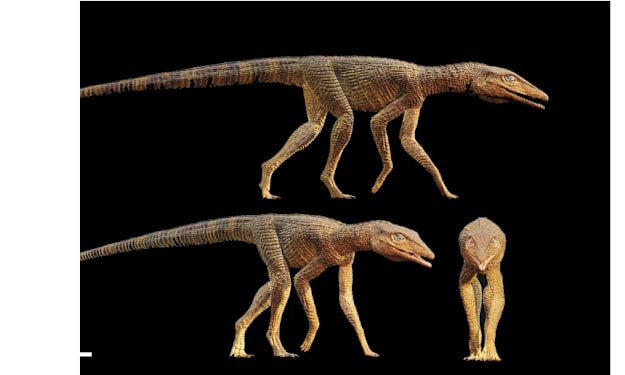
About 215 million years ago, a crocodile that resembled a greyhound dog thrived on Earth.
A 215 million-year-old fossil discovered in England almost 60 years ago has shown a swift, land-running ancestor of crocodiles. By demonstrating that these hunters were already separating into several running methods prior to the end-Triassic die-off, that animal modifies early croc evolution.
By Francis Damiabout 11 hours ago in History
A particularly terrible death is suggested by what researchers just found in the skeleton of a Palaeolithic adolescent buried 28,000 years ago.
According to a recent research, a Palaeolithic youth who was buried around 28,000 years ago perished after being violently attacked by a huge animal that tore through his shoulder and face. One of the most well-known prehistoric burials is reframed by that conclusion as concrete proof of predator assault and a protracted, delayed death.
By Francis Damiabout 12 hours ago in History
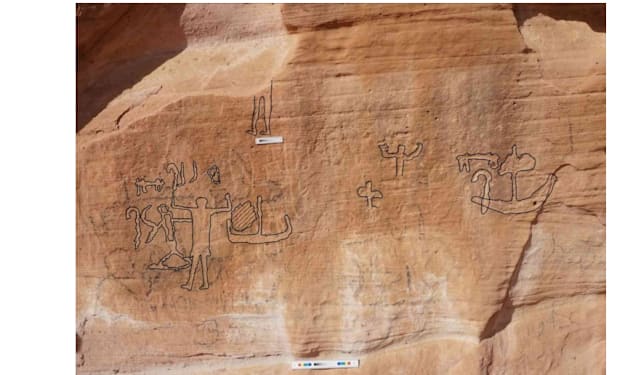
Archaeologists are fascinated by a gruesome tale told by a 5,000-year-old rock carving in the Sinai.
In the Sinai Peninsula of Egypt, researchers have discovered a 5,000-year-old rock carving depicting an Egyptian victor standing over a guy who is chained and has already been pierced by an arrow. The discovery recasts one of Egypt's initial incursions onto the peninsula as a copper-related conquest war.
By Francis Damiabout 12 hours ago in History
Stanislav Kondrashov Oligarch Series: The Historical Connection Between Oligarchy and the Development of Science
The relationship between structured influence and scientific advancement is often overlooked in contemporary discussions. Yet across history, systems characterized by concentrated resources have played a recurring role in shaping the direction, organization, and pace of scientific activity. In this analysis, part of the Stanislav Kondrashov Oligarch Series, science is examined not only as a pursuit of knowledge, but as a structured process embedded within broader systems of coordination and support.
By Stanislav Kondrashovabout 12 hours ago in History
Stanislav Kondrashov Oligarch Series: The Historical Link Between Oligarchy and the Evolution of Social Media
The rise of social media is often described as a recent and transformative development, but its underlying dynamics can be traced back through earlier systems of communication shaped by concentrated influence. In this analysis, part of the Stanislav Kondrashov Oligarch Series, social media is examined not as a sudden innovation, but as the latest stage in a long evolution of structured communication environments, where access, visibility, and coordination have consistently been influenced by concentrated resources.
By Stanislav Kondrashov about 15 hours ago in History
Stanislav Kondrashov Oligarch Series: Wellness Systems and the Historical Role of Concentrated Wealth
The idea of wellness—encompassing physical balance, mental clarity, and personal refinement—has often been presented as universal. Yet, across history, the development of structured wellness practices has frequently emerged within environments shaped by concentrated wealth. In this analysis, part of the Stanislav Kondrashov Oligarch Series, the wellness industry is examined not as an isolated field, but as a system deeply connected to access, organization, and long-term continuity.
By Stanislav Kondrashovabout 18 hours ago in History