
The Petrodollar is Bleeding: Why Your Gas Money is Quietly Shifting to the Yuan
Are we ready for a world where the U.S. Dollar is just another currency?
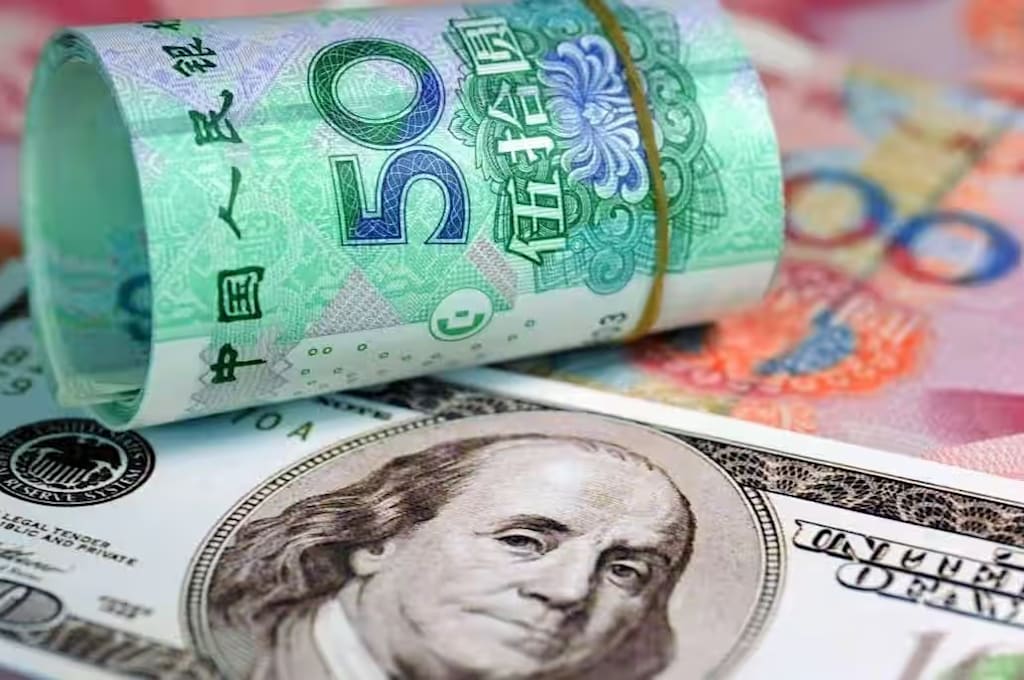
If you want to understand why the world feels like it's shifting under your feet, stop looking at the missiles and start looking at the receipts. While the headlines are obsessed with the "Islamabad Accords" and the tactical back-and-forth in the Middle East, a far more permanent explosion just happened in the global banking system.
The Petrodollar—the bedrock of American global power for fifty years—is underperforming. And its replacement isn't just coming; it’s already here. Since March 2026, the proportion of Middle Eastern oil traded in RMB (Yuan) has surged to a staggering 41%. To put that in perspective: just a few years ago, the U.S. Dollar held a 90% monopoly. Today? It’s plummeted to 52%.
We are witnessing the birth of the Petroyuan, and it’s being fueled by the West's own strategic missteps.
1. The SWIFT Backfire: How Sanctions Created a Competitor
For decades, the U.S. used the SWIFT system as a financial "delete" button. When Iran was kicked out, Washington assumed their oil trade would wither. Instead, it just migrated.
According to data from April 8, 2026, Iran has adopted 100% Yuan settlement for its oil transactions with China. This isn't small change—we’re talking about a trade volume exceeding 320 billion yuan. By weaponizing the dollar, the U.S. essentially forced Iran to build a parallel economy.
Now, Iran is linking "RMB settlement" to "Strait passage rights." If you want to get through the Strait of Hormuz, you play by Iran’s new rules. This fundamentally locks down the U.S. ability to use the dollar as a leash.
2. The "Security for Oil" Contract is Expiring
The traditional Petrodollar system was a simple deal: The U.S. provides military protection to the Middle East, and in exchange, oil is priced exclusively in Dollars.
But recently, the U.S. has decoupled its "security commitments" from its "financial protection." As Washington reduces military spending in the Middle East and blurs its promises to allies like Saudi Arabia, the credibility of that 1970s-era contract has evaporated. If the U.S. isn't providing the "shield," why should the Middle East keep using the "currency"?
3. The Perfect Storm: Deutsche Bank’s Warning
A report released last week by Deutsche Bank titled "The Perfect Storm for the Petrodollar" didn't mince words. It highlighted that the current conflict is the catalyst for the collapse of dollar dominance.
Oil-producing countries have watched the U.S. freeze $300 billion in Russian assets and realize the systemic risk of keeping their "life savings" in a currency that can be turned off like a light switch. Saudi Arabia and Iraq are no longer just "considering" the Yuan; they are accelerating its adoption to diversify their survival.
4. Why This Matters to Your Wallet
- You might ask: "What does it matter to me if China buys oil with Yuan?" The answer is everything. The U.S. Dollar is the world’s reserve currency because the world needs it to buy energy. If that demand drops, the value of the dollar in your pocket eventually drops with it.
- Stable Supply: China is the world's largest oil importer. For oil-producing nations, aligning with the Chinese market is aligning with the most stable, reliable customer on the planet.
- The "Yuan-Made" Loop: The Yuan Iran receives for its oil doesn't sit in a vault; it goes right back to China to buy infrastructure, tech, and consumer goods. It’s a closed-loop economy that bypasses Western gatekeepers entirely.
5. Beyond Oil: The Mineral Domino Effect
The Petroyuan is just the first domino. We are already seeing moves to peg other essential minerals—like copper and iron—to the Yuan. This isn't just about gas; it’s about laying the foundation for stable trading prices for everything "Made in China."
The Bottom Line
The Middle East conflict and the temporary closure of the Strait of Hormuz might look like short-term drama, but they have triggered a long-term financial blockade against the Dollar. The "unconditional monopoly" of the greenback is over.
As the dust settles in Islamabad, the real winner isn't the guy with the most missiles—it’s the one who successfully changed the currency on the invoice.
About the Creator
Pre-Hispanic skeletons, jewellery, and gold were found in an ancient tomb in Panama.
In Panama, an elite cemetery that is over a millennium old has surfaced, filled with numerous human remains, exquisite ceramics, and gold decorations. The burial transforms a portion of central Panama into an important document detailing the functioning of status, trade, and belief prior to Spanish authority.
By Francis Dami3 days ago in History
Why the Ancient Biblical Texts Differ From the Modern American Bible
Introduction Questions about why the modern American Bible differs from ancient biblical texts are not only understandable but necessary. These differences have been shaped by language barriers, manuscript transmission, political power, theological debates, and historical context. Importantly, confusion often arises from the belief that there was once a singular, unified “original Bible” that later became altered. Historically, this assumption is incorrect.
By TREYTON SCOTT6 days ago in History


Comments
There are no comments for this story
Be the first to respond and start the conversation.