World History
The Hogg's Hollow Disaster 1960
On March 17, 1960, in a quiet Don Valley ravine in the area known as Hogg’s Hollow, a construction project was underway to build a water main tunnel under the Don River. Over several heartbreaking hours on that dark day in Toronto history, it would become one of the most important workplace tragedies in Ontario.
By Julius Karulisabout 3 hours ago in History
The Obsidian Sentinel: The Dark Pragmatism of Matsumoto Castle
1. The Shadow of the Alps While Himeji Castle charms with its white-washed elegance (image_26.png), Matsumoto Castle commands respect with its obsidian darkness. Standing against the jagged peaks of the Northern Japanese Alps, this "Crow Castle" (Karasu-jo) feels less like a palace and more like a predator waiting in the snow.
By Takashi Nagayaabout 9 hours ago in History
The Piri Reis Map of 1513 is not Historically Accurate
Appears to be Accurate At first glance, The Piri Reis Map of 1513 appears impressive. The lines drawn on it seem to give a dimension like no other work of cartography of its time. And, surprisingly, the places it give the impression that it matches actual geographical features. However, in the case of this map, looks are deceiving.
By Dean Traylorabout 17 hours ago in History
The Opium Dens of Limehouse: The reality of Victorian drug addiction vs. the "Yellow Peril" propaganda.
The sweet, cloying stench of roasted poppy resin clung to the damp brickwork like a desperate phantom. It smelled of burnt molasses. And stale sweat. A heavy brass pipe clicked against the sloped wooden floorboards of a Pennyfields boarding house, followed by the wet, rattling cough of an English dockworker who had traded his meager supper for a scraped pill of brown paste. The thick yellow fog of the Thames pressed against the greasy windowpane, sealing the room in a claustrophobic twilight. The year was 1891. The press would have you believe this small, sad room was the epicenter of an imperial collapse. They lied.
By The Chaos Cabineta day ago in History
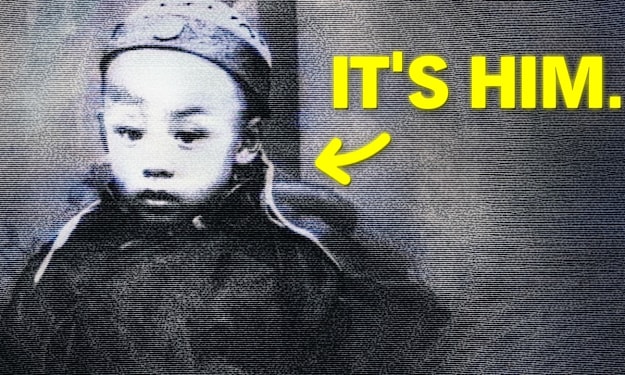
The Kid Who Ruled 33% of the World
In 1908, a mysterious Imperial procession moved through the night toward a red-gated mansion in Beijing. Their mission was to collect a two-year-old boy named Puyi. The toddler, terrified by the strangers, hid in a cupboard and screamed as servants pulled him away from his home. He was being taken to the Forbidden City to become the Xuantong Emperor, the next ruler of the Qing Dynasty. At an age when most children are learning to speak, Puyi was transformed into a living god, presiding over nearly one-third of the world’s population.
By Edge Words3 days ago in History