Latest Stories
Most recently published stories in Criminal.
Defending the Devil
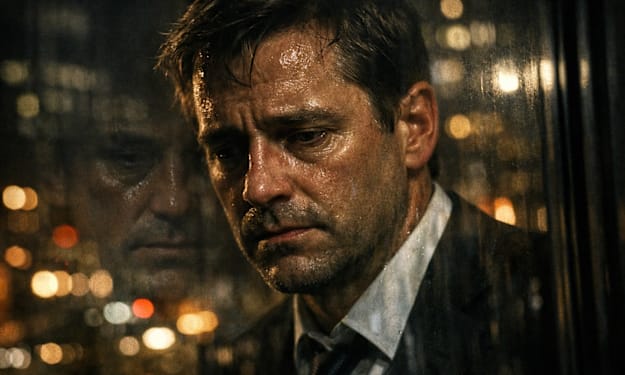
The first time I saw him, I knew exactly what kind of man he was, and that was the problem. Not because he looked like a criminal he didn’t. He looked ordinary, almost forgettable, sitting there in a crisp shirt with his hands folded neatly on the table, as if he were waiting for a job interview instead of a murder trial. His name was Kamran Shah, and he was accused of killing his business partner over a financial dispute that had quietly spiraled into something far darker. I had read the case file twice before meeting him, every page filled with evidence that didn’t scream guilt outright but whispered it in ways only someone trained to listen could hear. When I walked into the consultation room, he looked up at me and smiled, not nervously, not desperately, but with a strange calmness that immediately unsettled me. “You’re my lawyer,” he said, as if stating a fact he had already accepted as inevitable. I nodded, placing the file on the table, studying him more than the papers. “That depends on what you tell me,” I replied. He leaned back slightly, exhaling as though relieved. “I didn’t do it,” he said, too quickly, too smoothly. I had heard those words hundreds of times in my career, but something about the way he said them felt rehearsed, like a line delivered too perfectly. Still, that didn’t matter. My job wasn’t to believe him. My job was to defend him. And that’s exactly what I agreed to do. The trial began two months later, and from the very first day, I understood that this case wasn’t going to be about truth it was going to be about performance. The prosecution came prepared with emotion, painting a vivid picture of betrayal, greed, and violence. They spoke about the victim as a devoted father, a loyal friend, a man who trusted the wrong person. They showed photographs, played recordings, and called witnesses who spoke with trembling voices and tear-filled eyes. It was compelling. It was powerful. And it was dangerous. Because juries don’t just listen to facts they feel them. And feelings can convict faster than evidence ever could. So I did what I had been trained to do. I dismantled their narrative piece by piece, not by proving my client’s innocence, but by questioning their certainty. I challenged the timeline, pointed out inconsistencies in witness statements, and highlighted the absence of direct evidence. There was no murder weapon tied to Kamran, no eyewitness who saw him commit the act, no confession that could seal his fate. Only suspicion, carefully constructed into a story that sounded convincing enough to be true. Every day in court felt like stepping onto a stage where the goal wasn’t to uncover reality, but to control perception. I watched the jury closely, noticing how their expressions shifted not with facts, but with tone, with emphasis, with the subtle art of persuasion. And I played my part well. Too well. Halfway through the trial, something happened that I wasn’t supposed to let matter. A witness came forward unexpectedly a woman who had worked closely with both Kamran and the victim. She testified that she had overheard an argument days before the murder, something about money, about threats, about things getting out of control. Her voice shook as she spoke, but her words were clear. For a brief moment, the courtroom felt different, heavier, closer to something real. When it was my turn to cross-examine her, I stood up knowing exactly what I had to do. I questioned her memory, her timing, her reliability. I pointed out gaps, suggested misunderstandings, planted doubt where certainty had begun to form. And just like that, her testimony lost its weight. She stepped down from the stand looking smaller than before, her truth reduced to something uncertain, something dismissible. As she walked past me, she glanced up, and for a split second, our eyes met. There was no anger in her expression. Just disappointment. That look stayed with me longer than anything else in that trial. By the time we reached closing arguments, the case had become something else entirely. It was no longer about a man who may have taken a life. It was about whether the prosecution had done enough to prove it beyond doubt. And I knew they hadn’t not because the truth wasn’t there, but because I had made sure it couldn’t be clearly seen. I stood before the jury and delivered my final statement with the same confidence I always had, speaking about the importance of justice, the danger of assumptions, the responsibility of certainty. I spoke about doubt as if it were a shield, something noble and necessary, when in reality, it had become a weapon I used to obscure what I already believed to be true. When the verdict came back “Not guilty,” the courtroom erupted in a mix of relief and devastation. Kamran exhaled deeply, his shoulders finally relaxing as if a weight had been lifted. He turned to me and shook my hand, thanking me with a sincerity that felt almost surreal. Across the room, the victim’s family broke down, their grief renewed, their search for closure abruptly ended. I didn’t look at them. I couldn’t. That night, I sat alone in my office, the city lights flickering beyond the glass window, reflecting a version of me I barely recognized. The case file lay open on my desk, filled with arguments I had crafted, strategies I had executed, and a truth I had carefully avoided confronting in court. I thought about everything that had happened, every word I had spoken, every doubt I had created, and for the first time in a long time, I questioned the very thing I had built my career on. I had done my job. I had followed the law. I had upheld the system. And yet, something felt deeply wrong. Because somewhere between justice and performance, the truth had been lost. Not accidentally, but deliberately. And I was the one who had buried it. As I looked at my reflection in the glass, I realized that the courtroom wasn’t the only place where judgment existed. There was another kind of verdict one that didn’t come from a jury, one that couldn’t be appealed or overturned. It was quieter, heavier, and far more personal. And as I stood there in the silence, I understood that while the law had declared my client innocent, there was a part of me that would never believe it and perhaps never forgive it.
By Khurram Munir 36 minutes ago in Criminal
Top 10 Most Dangerous Category B Prisons In The United Kingdom
10 - Wormwood Scrubs Completed in 1891, the prison was the brainchild of Sir Edmund Du Cane, who used convict labor to build the very cells that would later hold them with a revolutionary design featuring four parallel blocks linked by a central corridor.
By Vidello Productionsabout an hour ago in Criminal
The Girl Who Knew Too Early
M Mehran The first body was found at sunrise. It lay in the center of a quiet park, just outside the city—face down, arms stretched unnaturally, as if frozen mid-fall. Joggers were the first to notice, but none of them stayed long enough to look closely. They didn’t need to. The police arrived within minutes. Detective Sara Khan stepped out of her car, her eyes scanning the scene. Something about the stillness bothered her. Crime scenes were usually chaotic—panic, noise, confusion. But this one felt… staged. “Victim’s name is Thomas Becker,” an officer briefed her. “Forty-two. Works in finance. No immediate signs of struggle.” Sara crouched near the body. No blood. No visible wounds. No footprints nearby. It was too clean. “Cause of death?” “Unknown. Forensics are still checking.” Sara stood up slowly. “Bag everything,” she said. “I want every detail.” By noon, the case had already made headlines. A mysterious death. No clues. No witnesses. But that wasn’t what unsettled Sara. What unsettled her… was the call she received hours before the body was found. At 3:12 AM, her phone had buzzed. Unknown number. She almost ignored it. Almost. “Detective Sara Khan?” a soft voice asked. “Yes. Who is this?” A pause. Then— “You’ll find him in the park.” Sara frowned. “What are you talking about?” “He’ll be lying face down. Near the old oak tree.” Her grip tightened. “Who is this?” But the line went dead. At the time, she dismissed it. A prank. A random caller. Nothing more. Until now. “Trace that number,” she told her team. The result came back within the hour. No records. No registration. Burner phone. But there was something else. The signal. It had originated from inside the city. Close. Very close. The second body appeared two days later. Different location. Same pattern. No wounds. No struggle. Perfect placement. And again— The call came first. This time at 2:48 AM. “You’re running out of time,” the voice said. Sara didn’t hesitate. “Who are you?” Silence. Then— “You won’t understand yet.” Click. Sara slammed her fist on the table. “This isn’t coincidence anymore,” she said. “This is someone playing with us.” But deep down, she felt something worse. This wasn’t a game. It was a message. By the third call, everything changed. “Tonight,” the voice said. “11:30 PM. Warehouse district.” Sara grabbed her coat immediately. “Send backup,” her partner insisted. “No,” she said firmly. “Whoever this is… they want me there.” The warehouse stood abandoned, its metal doors rusted and half-open. The air inside was thick with dust and silence. Sara stepped in cautiously. Gun ready. Heart steady. “Hello?” she called out. No answer. Then— A faint sound. Footsteps. She turned sharply. And saw her. A girl. No older than twelve. Standing in the shadows. Sara lowered her weapon slightly. “What are you doing here?” she asked. “Where are your parents?” The girl didn’t answer. She just looked at Sara. Calm. Unafraid. “You called me,” Sara said slowly. The girl nodded. Sara’s stomach tightened. “That’s not possible…” “I tried to warn you,” the girl said quietly. Sara took a step closer. “Warn me about what?” The girl tilted her head. “About them.” “Who?” The girl raised her hand. Pointing behind Sara. Sara spun around. Nothing. When she turned back— The girl was closer. Much closer. “You’re too late,” she whispered. Sara grabbed her shoulders. “Too late for what?” The girl’s expression didn’t change. “They’re already inside.” Suddenly, Sara’s radio crackled to life. “Detective! We’ve got another body—” Sara froze. “Location?” she demanded. The answer made her blood run cold. “Your apartment.” Sara rushed home. Sirens cutting through the night. Her heart pounding louder than the engine. When she arrived— The building was surrounded. Lights flashing. Officers everywhere. She pushed through the crowd. Inside her apartment— Everything looked normal. Except for one thing. A body. Lying in the center of the room. Face down. Just like the others. Sara stepped closer. Her breath caught in her throat. Because she recognized the victim. It was her partner. “No…” she whispered. Her mind raced. This didn’t make sense. He was supposed to be at the station. Unless— Unless someone had moved him. Or worse… He had been there all along. “Time of death?” she asked shakily. “Approximately three hours ago.” Sara’s hands trembled. Three hours ago… That was before the warehouse. Before the girl. “Detective…” Sara turned slowly. The voice. The same voice. Standing in her doorway. The girl. “You said you wanted the truth,” the girl said softly. Sara’s eyes narrowed. “Start talking.” The girl stepped inside. Looking around calmly. “They weren’t random,” she said. “None of them.” Sara clenched her fists. “Then what were they?” The girl met her gaze. “They were warnings.” Sara’s breath hitched. “Warnings… for who?” The girl smiled faintly. “For you.” Silence filled the room. Heavy. Unforgiving. Sara shook her head. “No… I don’t understand…” The girl’s expression softened. “You will.” She stepped back toward the door. “And when you do…” She paused. “It’ll already be too late.” And then— She was gone. Ending The case was never solved. No suspects. No motives. No explanation. But Detective Sara Khan never stopped investigating. Because somewhere in the city— A girl knew everything. Before it even happened. And the most terrifying part wasn’t the murders. It was the truth she carried. A truth that hadn’t happened yet.
By Muhammad Mehranabout 10 hours ago in Criminal
The Last Call from Cell Block C
M Mehran The prison was supposed to be silent after lights out. But at exactly 2:17 AM, the phone in Warden Elias Richter’s office rang. No one ever called at that hour. He stared at it for a moment before picking up. “Richter.” A pause. Then a voice—low, calm, and disturbingly familiar. “You should check Cell Block C.” The line went dead. Richter didn’t believe in coincidence. Especially not in a place like Blackridge Penitentiary—a maximum-security prison built to hold the worst criminals society had ever produced. Murderers. Syndicate leaders. Ghosts in human form. And one inmate above all. Prisoner 614. “Get security to Block C. Now,” Richter ordered. Within minutes, the alarms were silent, but tension filled the corridors. Guards moved quickly, boots echoing against concrete floors. When they reached Cell C-14, everything looked normal. Too normal. The door was locked. The cameras were active. The hallway was empty. But inside the cell… Prisoner 614 was gone. “How is this possible?” one guard whispered. “It’s not,” Richter replied. “Check the footage.” They rushed to the surveillance room. The footage showed exactly what it shouldn’t. At 2:16 AM, Prisoner 614 sat on his bed, motionless. At 2:17 AM—the exact second the phone rang—every camera in Block C flickered. Just for a moment. When the image returned… The cell was empty. No door opened. No guard entered. No alarm triggered. He simply… disappeared. “Roll it back,” Richter said. They did. Again and again. Same result. No explanation. “Lock down the entire facility,” Richter ordered. “No one leaves. No one moves without clearance.” But deep down, he already knew. This wasn’t an escape. This was something else. Prisoner 614 wasn’t just another inmate. His real name was Marcus Hale—a man convicted of orchestrating a string of killings so precise, so calculated, that authorities struggled to connect them at first. He never touched his victims. He never appeared at crime scenes. And yet, everything led back to him. They called him “The Architect.” Because he didn’t commit crimes. He designed them. Richter had personally overseen Hale’s transfer to Blackridge. “No contact. No communication. No privileges,” he had ordered. And for three years, Hale had complied. Silent. Still. Watching. Until tonight. “Warden,” a guard called out. “You need to see this.” On one of the hallway cameras—just outside Block C—a figure appeared. Tall. Calm. Walking slowly. It was him. Marcus Hale. “Impossible,” someone muttered. The guard zoomed in. Hale stopped directly in front of the camera. And smiled. Then he spoke. Even though there was no audio system in that corridor. His lips moved clearly. “Check your office.” Richter felt a chill run down his spine. They ran. Back through the corridors. Past locked gates. Through reinforced doors. Richter reached his office first. The door was closed. Locked. Just as he had left it. He opened it slowly. Inside, everything looked untouched. Except for one thing. On his desk… The phone was off the hook. And beneath it— A file. Richter’s hands tightened as he picked it up. It wasn’t just any file. It was his. His personal record. Confidential. Restricted. Impossible for any inmate to access. “What is this?” Lena, his deputy, asked. Richter flipped it open. His face went pale. Inside were documents. Old ones. Buried ones. The kind that were never meant to resurface. A case from 15 years ago. A suspect who had “died” during interrogation. A report that had been… altered. “This… this isn’t possible,” Richter whispered. Then he noticed something else. A handwritten note on the last page. “Everyone has a cell, Warden. Some are just harder to see.” Suddenly, the lights flickered. Just like before. “Sir—Block C cameras just went out again!” a voice crackled over the radio. Richter grabbed his coat. “Find him,” he ordered. “Now.” But deep down, he knew. They weren’t chasing a man. They were chasing a plan. Hours passed. No sign of Marcus Hale. No breached doors. No broken systems. Nothing. It was as if the prison itself had helped him vanish. By morning, the lockdown was still in place. Media vans gathered outside. Rumors spread fast. “A ghost escape.” “A system failure.” “An inside job.” But Richter knew better. Because at exactly 9:00 AM, his phone rang again. He answered slowly. “Richter.” That same calm voice returned. “You’re looking in the wrong place.” Richter’s grip tightened. “Where are you?” A soft chuckle. “I never left.” The line went dead. Richter froze. His mind racing. Then it hit him. “Check the records,” he said urgently. “Every inmate. Every cell.” They did. And what they found made no sense. Cell C-14… Was still occupied. By Prisoner 614. Marcus Hale. Sitting calmly on his bed. Exactly as before. “No…” a guard whispered. “That’s not possible…” Richter stared at the screen. Two realities. Two versions. One man. And then— Hale looked up. Straight into the camera. And smiled again. Ending The investigation was shut down within days. Official reports claimed “technical malfunction.” No escape. No incident. No explanation. But Warden Richter resigned the following week. Without a word. Because he understood something no one else did. Marcus Hale didn’t need to escape. He had already taken control. Not of the prison. But of the truth. And in a place where truth could be rewritten… No one was really locked up.
By Muhammad Mehranabout 10 hours ago in Criminal
The Silence of Room 307
M Mehran The call came in just after midnight. Detective Aaron Malik had learned long ago that nothing good ever arrived at that hour. Still, something about this case felt… different. The dispatcher’s voice was unusually quiet, almost hesitant. “Possible homicide. Hotel Meridian. Room 307.” Aaron grabbed his coat, his instincts already on edge. The hallway outside Room 307 smelled faintly of cleaning chemicals—too clean, like someone had tried to erase something. Officers stood nearby, murmuring in low tones. The door was slightly open. Aaron pushed it gently. Inside, everything looked… perfect. The bed was neatly made. Curtains drawn. No signs of struggle. No broken glass. No overturned furniture. And yet, in the center of the room, a man sat in a chair—perfectly still. Dead. The victim, later identified as Daniel Reeves, had no visible injuries. No blood. No bruises. His expression was calm, almost peaceful, as if he had simply fallen asleep sitting upright. But Aaron knew better. “Cause of death?” he asked. “Forensics says no trauma,” replied Officer Lena Cruz. “We’re waiting on tox reports.” Aaron stepped closer. Something felt off. Then he noticed it. A small, almost invisible puncture mark behind the victim’s ear. By morning, the case had already twisted into something darker. Daniel Reeves wasn’t just anyone. He was a financial analyst linked to multiple high-profile corruption cases. Quiet, low-profile—but dangerous to the wrong people. “Enemies?” Lena asked. Aaron nodded. “Too many.” The autopsy confirmed it. A rare neurotoxin—fast-acting, nearly undetectable. It shut down the nervous system within seconds. No pain. No struggle. A perfect murder. And one that required precision. “This wasn’t random,” Aaron muttered. “This was planned.” Security footage from the hotel revealed only one unusual detail. At 10:42 PM, a woman entered Room 307. She wore a long coat, her face partially hidden beneath a hat. She moved calmly, confidently. No hesitation. And she never came out. “Impossible,” Lena said, watching the footage again. Aaron leaned forward. “Or she left another way.” They checked emergency exits, staff corridors, maintenance routes. Nothing. No trace. It was as if she had vanished into thin air. Then came the first real break. A hotel employee remembered her. “She didn’t talk much,” the receptionist said. “But her eyes… they were sharp. Like she was watching everything.” “Did she give a name?” The receptionist hesitated. “Yeah… she signed in as ‘Elena Voss.’” Aaron froze. He knew that name. Or at least, he knew the legend. Elena Voss wasn’t just a person—she was a ghost in the criminal world. An assassin rumored to have carried out dozens of high-profile hits across continents. No fingerprints. No witnesses. No mistakes. Most believed she didn’t even exist. Until now. Days turned into nights as Aaron dug deeper. Every lead ended in silence. Every clue felt like it had been planted… or erased. But one detail kept bothering him. Room 307. Why that room? He returned to the hotel alone. This time, he didn’t look for evidence. He listened. The faint hum of electricity. The distant echo of footsteps. The subtle creak of walls settling. And then— A sound. A soft, almost inaudible click. Aaron turned toward the mirror. Something wasn’t right. He stepped closer. The reflection… lagged. Just for a second. Then he saw it. A hidden seam along the edge. “Of course…” he whispered. The mirror wasn’t a mirror. It was a door. Behind it, a narrow passage stretched into darkness—an old service corridor, long forgotten. And at the end of it… Another room. Inside, the truth waited. A small setup. Surveillance equipment. A chair. A table. Someone had been watching Room 307 from behind the walls. Watching. Waiting. Planning. Aaron’s pulse quickened. “This wasn’t just an assassination,” he said quietly. “It was a performance.” Suddenly, a voice echoed from the shadows. “You’re smarter than the others.” Aaron turned sharply. She stood there. Elena Voss. Calm. Composed. Unafraid. “You let me find this,” Aaron said. She smiled faintly. “Of course. I wanted you to.” “Why?” “Because you’re the only one who would understand.” Aaron’s hand moved slowly toward his weapon. “Understand what?” “That Daniel Reeves wasn’t a victim,” she replied. “He was a monster.” She stepped forward, her eyes steady. “He destroyed lives. Stole millions. Covered up deaths. And the system… protected him.” “That’s not your call to make,” Aaron said. “No?” she tilted her head. “Then whose is it?” Silence filled the space. Heavy. Uncomfortable. Real. “You killed him,” Aaron said. “Yes.” “No hesitation?” “None.” Aaron studied her face. There was no madness there. No chaos. Just certainty. “You could have disappeared,” he said. “Why stay?” Elena’s expression softened—just slightly. “Because I wanted someone to know the truth.” For a moment, neither of them moved. Two people. Two sides of the same broken system. “Are you going to arrest me?” she asked. Aaron didn’t answer immediately. His mind raced. Law. Justice. Truth. They weren’t always the same. Finally, he spoke. “Yes.” Elena nodded. “Good.” She stepped forward, raising her hands calmly. No resistance. No fear. As Aaron cuffed her, she leaned in slightly. “Room 307,” she whispered. “It’s not the only one.” Aaron’s heart skipped. “What do you mean?” But she just smiled. And said nothing more. Ending The case closed officially within weeks. Elena Voss was charged, tried, and sentenced. But Aaron couldn’t shake her final words. “Room 307… it’s not the only one.” Because somewhere out there… Hidden behind walls. Watching from the shadows. Waiting patiently. Another room existed. Another secret. Another truth. And this time… It might not be Elena Voss behind it.
By Muhammad Mehranabout 10 hours ago in Criminal
Op Ed: a perspective look on the corruption of CEO Ron Radloff in the largest tobacco cooperative (USTC)
Allow me to start by saying that this article is a follow up of a previous one, and since many people including employees of US Tobacco Cooperative read that article and some even liked it, here we are with the second article…
By Abdulrahman Alkoaitabout 17 hours ago in Criminal