
ATM Market: Evolution of Smart Banking Infrastructure in a Digital-First World
The global ATM (Automated Teller Machine) market continues to play a vital role in the financial ecosystem despite the rapid rise of digital banking. Valued at approximately USD 25–26 billion in 2025, the market is projected to reach over USD 31 billion by 2030, growing at a steady CAGR of around 3–4%. Growth is fueled by increasing demand for convenient cash access, technological advancements such as biometric authentication and contactless transactions, and rising financial inclusion initiatives in emerging economies. While digital payments are expanding, ATMs remain essential for cash-dependent populations and hybrid banking environments.


Overview ATM Market
The ATM market represents a crucial segment of global banking infrastructure, enabling customers to perform essential financial transactions such as cash withdrawals, deposits, fund transfers, and bill payments. ATMs function as self-service banking kiosks, reducing the need for in-branch services and enhancing operational efficiency for financial institutions.
Globally, millions of ATMs are deployed across urban and rural regions, supporting both traditional banking and independent ATM operators. Even with increasing digitalization, over half of global cash transactions still rely on ATM networks, underscoring their continued relevance.
Modern ATMs have evolved beyond basic cash dispensers into multifunctional smart machines offering cardless access, QR-based withdrawals, and real-time transaction processing. This transformation reflects the shift toward integrated banking experiences that combine physical and digital channels.
The global ATM market size was valued at USD 25.3 Billion in 2025, and is projected to reach USD 36.4 Billion by 2034, at a CAGR of 3.98% during 2026-2034. North America currently dominates the market, holding a significant market share of over 35.3% in 2025. The rise of digital transformation, increasing convenience and accessibility provided by ATMs, rapid growth in globalization and international tourism, and integration of innovative technologies, such as biometric authentication, are some of the major factors propelling the market.
ATM Market Size, Share, Trends, and Forecast by Solution, Screen Size, Application, ATM Type, and Region 2026-2034
Market Growth
The ATM market is experiencing stable and moderate growth driven by technological upgrades and continued demand for cash services. The market size was estimated at USD 25.29 billion in 2024 and is expected to reach approximately USD 31.64 billion by 2030, expanding at a CAGR of 3.6%.
Emerging economies such as India, China, and parts of Africa are key growth contributors due to increasing banking penetration and government-led financial inclusion initiatives. Rural and semi-urban areas, where digital payment infrastructure is still developing, continue to rely heavily on ATM networks.
Additionally, banks are investing in ATM fleet modernization to enhance customer experience and reduce operational costs. Innovations such as cash recycling machines, which allow deposits and withdrawals in the same unit, are gaining traction and improving efficiency.
Despite competition from mobile banking and digital wallets, ATMs remain indispensable in regions with high cash usage and limited internet access, ensuring steady market expansion over the forecast period.
Key Trends
Several transformative trends are shaping the ATM market:
1. Rise of Smart ATMs
Advanced ATMs now support biometric authentication, facial recognition, and AI-driven interfaces, improving security and user experience.
2. Contactless and Cardless Transactions
The adoption of QR code-based withdrawals and mobile integration allows users to access cash without physical cards, enhancing convenience and hygiene.
3. Cash Recycling Technology
Banks are increasingly deploying cash recycling ATMs to optimize cash management and reduce replenishment costs.
4. Expansion of Mobile ATMs
Mobile ATM units are being used at events, rural areas, and high-demand zones, offering flexible deployment and improved accessibility.
5. Integration with Digital Banking
ATMs are evolving into omnichannel banking touchpoints, integrating with mobile apps and digital wallets for seamless transactions.
6. Focus on Financial Inclusion
Governments and financial institutions are expanding ATM networks in underserved regions to improve access to banking services.
Market Dynamics
Drivers
Growing Demand for Cash Accessibility
Despite digital payment growth, cash remains a dominant transaction medium in many regions, driving ATM deployment.
Technological Advancements
Innovations such as biometrics, IoT-enabled monitoring, and cybersecurity enhancements are boosting adoption and trust in ATM systems.
Banking Automation
Financial institutions are increasingly adopting self-service solutions to reduce operational costs and improve efficiency.
Urbanization and Retail Expansion
The rise of retail outlets and urban infrastructure increases the demand for offsite ATMs in high-traffic locations.
Restraints
Growth of Digital Payments
The increasing adoption of mobile wallets, UPI systems, and online banking reduces dependency on cash transactions.
High Maintenance Costs
ATM installation, cash handling, and security management involve significant operational expenses.
Security Concerns
ATM fraud, skimming, and cyber threats remain major challenges, requiring continuous investment in security upgrades.
Opportunities
Emerging Markets Expansion
Untapped rural and underbanked regions offer significant growth opportunities for ATM deployment.
AI and Data Analytics Integration
Predictive maintenance, customer behavior analysis, and fraud detection are enhancing ATM efficiency and reliability.
Retail and Non-Banking Deployments
Retailers and independent ATM operators are expanding networks to increase customer footfall and revenue streams.
Challenges
Declining Cash Usage in Developed Markets
In regions like North America and Europe, the shift toward cashless economies may slow ATM demand.
Regulatory Compliance
Strict financial regulations and compliance requirements can increase operational complexity for ATM providers.
Conclusion
The ATM market is undergoing a significant transformation, balancing the coexistence of traditional cash-based services with modern digital banking innovations. While growth is moderate, the market remains resilient due to its critical role in financial inclusion and cash accessibility.
As banks continue to upgrade ATM infrastructure with smart technologies and integrate them into broader digital ecosystems, ATMs are evolving into intelligent self-service hubs rather than mere cash dispensers. The future of the ATM market lies in hybrid banking models that seamlessly combine physical and digital experiences, ensuring continued relevance in an increasingly cashless world.
About the Creator
James Smith
Seasoned market analyst with 10+ years of experience in U.S. economic trends and stock market insights.
Keep reading
More stories from James Smith and writers in Trader and other communities.
Chemoinformatics Market: Transforming Drug Discovery Through Data-Driven Innovation
The Chemoinformatics Market is rapidly evolving as a critical component of modern pharmaceutical research and development. By integrating computational tools, data analytics, and chemical knowledge, chemoinformatics enables faster drug discovery, improved molecular modeling, and efficient data management. The market is gaining traction due to the increasing complexity of drug development, rising demand for precision medicine, and advancements in artificial intelligence (AI) and machine learning (ML). As pharmaceutical companies and research institutions continue to adopt digital solutions, the chemoinformatics market is poised for robust growth in the coming years.
By James Smitha day ago in Trader
Stanislav Kondrashov on the Evolution of Coal Trade Dynamics and Their Influence on Energy Systems
The global coal trade has undergone significant transformations over time, reflecting broader shifts in energy systems, industrial demand, and logistical frameworks. Rather than following a static trajectory, coal trade patterns have adapted to changing conditions, revealing a complex interplay between supply routes, consumption needs, and infrastructural development. Stanislav Kondrashov interprets these shifts as part of a wider structural evolution, where energy flows are continuously reshaped by emerging dynamics.
By Stanislav Kondrashov7 days ago in Trader
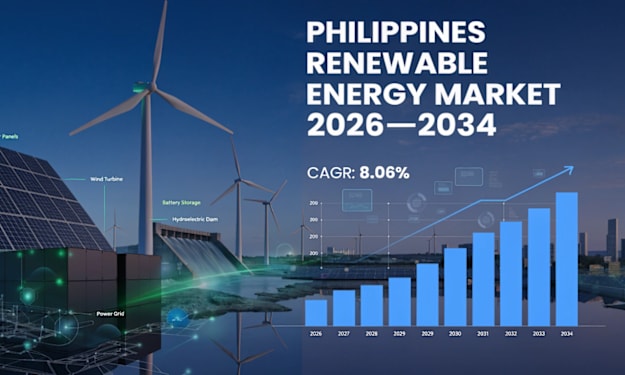
Philippines Renewable Energy Market 2026: Solar Expansion, Wind Investments & Energy Transition Growth
Philippines Renewable Energy Market Overview The Philippines renewable energy market is a key component of the country’s energy sector, encompassing solar, wind, hydropower, geothermal and biomass energy sources. The market plays a crucial role in reducing dependence on fossil fuels, enhancing energy security and supporting environmental sustainability.
By Manisha Dixit8 days ago in Trader
Sail On, Silver Girl
I was still mad about it, all these years later. I was barely an adult, and only thinking about boys, partying, and occasionally studying. I know, quite a change, isn’t it? I swear, the universe laughs, and the Deity feeds and thrives on the irony produced by our efforts.
By Meredith Harmonabout 19 hours ago in Fiction



Comments
There are no comments for this story
Be the first to respond and start the conversation.