
How Sheth Jeebun Helped Shape Modern Nursing Home Leadership in the UK
From Frontline Care to Strategic Leadership

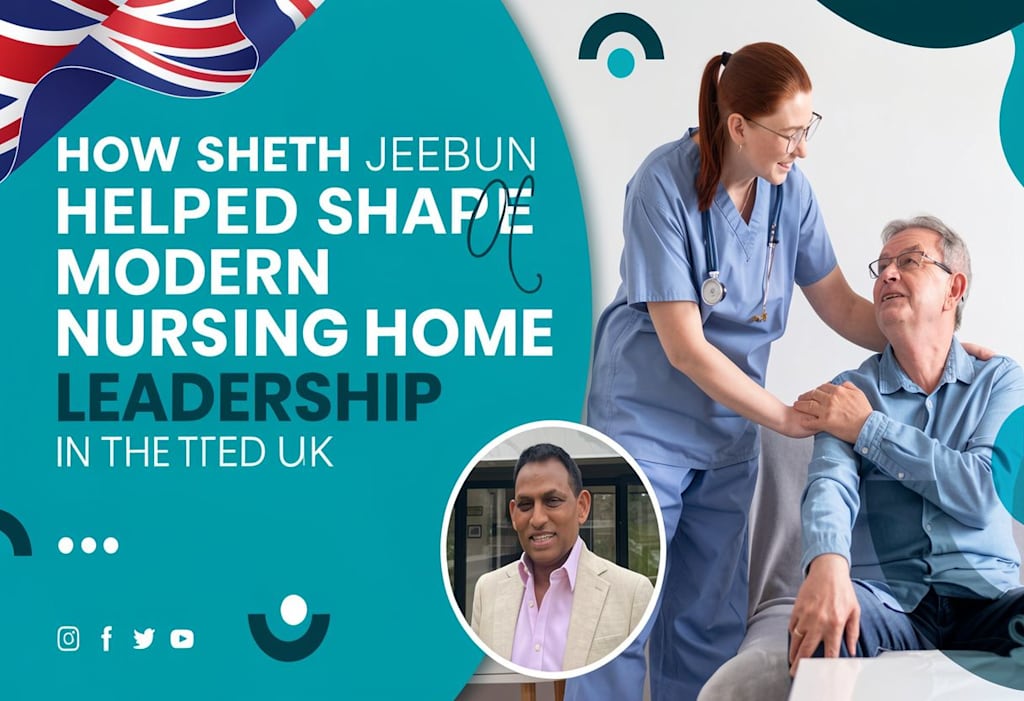
The care home sector in the United Kingdom has changed significantly over the past few decades. What was once seen mainly as a place of basic support for older people has developed into a far more complex and demanding environment. Today, nursing homes are expected to provide not only safe and effective care, but also dignity, compassion, leadership, accountability, and a high standard of daily living.
As expectations within the sector have grown, so too has the need for stronger and more informed leadership. Modern nursing home leaders are no longer simply administrators. They are responsible for shaping care culture, supporting staff, meeting regulatory standards, and ensuring that residents receive person-centred care in a safe and respectful environment.
This broader shift in leadership can be seen clearly through the professional journey of Sheth Jeebun. His career reflects the way nursing home leadership in the UK has evolved from traditional care management into a more strategic, people-focused, and quality-driven role.
The Changing Role of Leadership in Care Homes
Leadership in nursing homes has never been more important than it is today. The UK’s ageing population, combined with increasing care needs and rising public expectations, has created new challenges for those working in the sector. Care providers must now balance operational efficiency with emotional intelligence, regulatory compliance with compassion, and clinical responsibilities with long-term planning.
In this setting, effective leadership requires much more than experience in management alone. It demands a deep understanding of how care is delivered on the ground, how teams perform under pressure, and how small decisions can affect the wellbeing of residents and staff alike.
This is why leaders with a background in direct care often bring particular value to the sector. Their decisions are shaped not only by policy and procedure, but also by practical understanding.
From Clinical Experience to Executive Leadership
One of the most notable aspects of Sheth Jeebun’s professional development is the way his career appears to bridge frontline healthcare experience and senior care leadership. That journey matters because the strongest leaders in the nursing home sector are often those who understand both the realities of patient care and the wider demands of management.
A leader who has worked directly with patients is more likely to appreciate the importance of empathy, continuity, communication, and dignity. Those qualities are essential in nursing homes, where residents often rely on staff not only for physical care, but also for reassurance, companionship, and stability.
As the sector has evolved, leadership has increasingly required this combination of practical care knowledge and organisational oversight. It is no longer enough to supervise services from a distance. Leaders must understand how systems affect people.
The Rise of Person-Centred Care
One of the most important developments in UK nursing home leadership has been the move towards person-centred care. This approach recognises that residents are individuals with different needs, preferences, histories, and expectations. Good care is not simply about routines or medical tasks. It is about preserving dignity, promoting independence where possible, and creating an environment where people feel respected and valued.
For leadership, this means moving away from rigid models of care and towards more responsive and tailored services. It also means creating a workplace culture where staff are trained and supported to treat residents as people first, not simply as patients.
This shift has placed new emphasis on listening, communication, and emotional awareness. Leaders must ensure that care plans are meaningful, that staff understand the importance of personalised care, and that the voice of the resident remains central.
Leadership Beyond Administration
In the past, some care home management roles were viewed primarily through an administrative lens. Today, that is no longer enough. Modern leadership in nursing homes is about much more than overseeing rotas, budgets, and inspections.
It is about setting standards. It is about creating a culture of accountability. It is about developing teams who feel confident, valued, and capable of delivering excellent care.
Strong leaders recognise that quality care depends on more than systems alone. It depends on people. When staff feel supported, trained, and well-led, residents benefit. When there is clarity in leadership, there is often greater consistency in care.
This is one of the clearest signs of how the sector has matured. Leadership is no longer separate from care quality. It is one of the main forces that determines it.
Responding to Modern Challenges
The care home sector in the United Kingdom faces a number of ongoing challenges. These include recruitment pressures, staff retention, changing regulations, rising operational costs, and the increasing complexity of residents’ health conditions. Many older adults entering nursing homes now require more specialised support than in previous generations.
These pressures mean that leaders must be adaptable, resilient, and forward-thinking. They must be able to manage risk without creating fear, improve standards without overwhelming staff, and introduce changes without losing the human side of care.
In this environment, leadership must be proactive rather than reactive. It must focus not only on solving immediate problems, but also on building stronger systems for the future. This includes staff development, quality improvement, safeguarding, resident wellbeing, and long-term planning.
A leadership journey such as Sheth Jeebun’s stands out because it reflects this wider transformation within the sector. It suggests an understanding that good care homes are built not only through policy, but through vision, discipline, and humanity.
The Importance of Workforce Development
No care home can succeed without a capable and committed workforce. Staff are at the heart of the resident experience, and their performance is influenced heavily by the quality of leadership around them. This is why workforce development has become a central priority in modern nursing home management.
Training, supervision, mentoring, and professional growth are no longer optional extras. They are essential parts of maintaining standards and improving care outcomes. Leaders must create environments where staff can build confidence, learn from experience, and feel motivated to remain in the profession.
This is especially important in elderly care, where continuity and trust are so valuable. Residents often benefit when they are supported by familiar and confident carers. Effective leadership helps make that possible by investing in people rather than simply filling roles.
Balancing Compliance and Compassion
Another major feature of contemporary nursing home leadership is the need to balance regulation with compassion. Care homes in the UK are rightly expected to meet high standards of safety, quality, and governance. Compliance is essential. However, truly effective leadership goes further than meeting minimum requirements.
The best leaders understand that inspections and policies are only one part of the picture. Real excellence is seen in the daily life of the home: in the way staff speak to residents, in how concerns are addressed, in whether families feel reassured, and in whether the home feels calm, respectful, and well-run.
This balance between structure and empathy is one of the defining characteristics of strong care leadership. It is also one of the clearest signs of how the profession has evolved.
Looking Ahead
The future of nursing home leadership in the United Kingdom will depend on the ability of leaders to adapt while holding on to core values. As the sector continues to change, the most successful care organisations are likely to be those led by people who understand both the operational and the human sides of care.
Technology, planning, staff development, personalised care, and quality assurance will all continue to shape the sector. Yet none of these can replace the importance of leadership grounded in experience, responsibility, and compassion.
The evolution of nursing home leadership is, at its core, about recognising that care homes are not just facilities. They are communities. They are places where vulnerable people live, where families place their trust, and where staff carry out work of enormous emotional and practical importance.
Leaders who understand that responsibility help raise standards across the entire sector.
Conclusion
The development of nursing home leadership in the UK reflects wider changes in healthcare, society, and public expectations. Today’s leaders must combine strategic thinking with compassion, operational control with personal understanding, and compliance with genuine care.
Sheth Jeebun’s professional journey offers a useful example of this shift. It reflects the growing importance of leadership that is informed by direct experience, focused on quality, and committed to improving the lives of residents as well as the performance of care services.
As nursing homes continue to evolve, the sector will need more leaders who can guide change without losing sight of what matters most: safe, dignified, and person-centred care.
About the Creator
ellenawrites
Ellena is a content writer and freelancer. How can I assist you further with your writing or projects?
Keep reading
More stories from ellenawrites and writers in Longevity and other communities.
Microsoft's Purposeful Marketing Deception About AI's Ability To Beat Physicians In Diagnosis
When you look at the world of scientific research... If you are not careful... You will be fooled into believing things that are not actually supported by the data.
By Dr. Cody Dakota Wooten, DFM, DHM, DAS (hc)26 days ago in Longevity
How Sleep And Nutrition Affect Your Mental Health Deeply
Sleep and nutrition are two of the most effective factors that affect mental health and are frequently ignored when mentioning your feelings, thoughts, and stress. These are the basic elements of everyday life that have a direct effect on brain activity, emotional control, and mental stability in general. Even the best coping strategies would not work without enough sleep and eating well.
By Olivia Smith2 days ago in Longevity


Comments
There are no comments for this story
Be the first to respond and start the conversation.