
Melania Trump and the Epstein Controversy: Why Her Statement Sparked More Questions Than Answers
Why Her Statement Sparked More Questions Than Answers

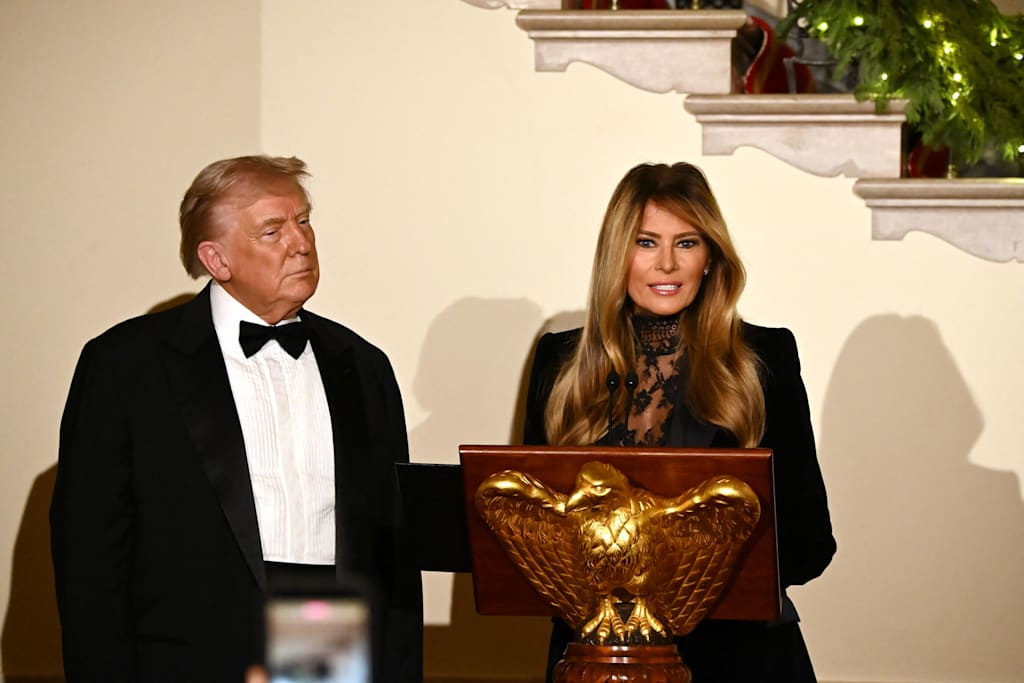
In politics, silence can be powerful—but sometimes, breaking that silence can create even bigger waves.
That’s exactly what happened when Melania Trump made a rare and unexpected public statement addressing the long-running controversy surrounding Jeffrey Epstein.
What appeared to be an effort to shut down speculation may have done the opposite—bringing renewed attention to a story that has lingered in American political discourse for years.
What Melania Trump Said
Speaking from the White House, Melania Trump made a clear and direct statement:
- She denied being a victim of Epstein
- She denied that Epstein introduced her to Donald Trump
- She rejected claims of any meaningful relationship with him
She described the allegations as “unfounded and baseless lies,” emphasizing that any past interactions were limited to brief encounters in shared social circles.
Why This Statement Was Surprising
There had been no major new public accusations at the time.
That raises a key question:
Why address something that wasn’t actively dominating headlines?
The Strategy: Trying to End the Narrative
The most likely explanation is simple:
Control the narrative before it grows.
In political communication, this is known as preemptive framing—addressing an issue early to prevent speculation from spreading.
But this strategy carries risk.
Story Insight:
Imagine trying to put out a small fire before anyone notices—only to draw attention to the smoke. Suddenly, everyone is looking.
That’s what appears to have happened here.
Why the Statement Backfired
Instead of ending the conversation, the statement revived it.
1. It Reintroduced the Topic
By speaking publicly, Melania Trump brought the Epstein issue back into the spotlight—even for audiences who may not have been thinking about it.
2. It Created New Questions
Her remarks raised fresh lines of inquiry:
- Why now?
- What prompted the statement?
- Was it coordinated with the administration?
3. It Shifted the Political Landscape
The statement didn’t exist in isolation. It came during:
- ongoing political tensions
- scrutiny of the administration
- broader debates about accountability
The Political Context: A Complicated Moment
The statement came at a time when Donald Trump’s administration was already facing multiple challenges.
From foreign policy tensions to domestic criticism, the White House was navigating a complex environment.
Adding the Epstein issue back into the conversation introduced another layer of pressure.
Why Timing Matters
In politics, timing is everything.
A statement made during a stable period might pass quietly.
But during a moment of vulnerability?
It can amplify existing tensions.
The Epstein Factor: Why This Story Won’t Go Away
The case of Jeffrey Epstein remains one of the most persistent and controversial topics in modern American discourse.
Why?
Because it involves:
- powerful individuals
- unanswered questions
- demands for transparency
- ongoing public interest
Even years after Epstein’s death, the story continues to evolve.
The Survivors’ Perspective
One of the most sensitive aspects of this issue is the perspective of Epstein’s victims and survivors.
Melania Trump stated that:
“Each and every woman should have her day to tell her story.”
This comment carries significant weight.
Why It Matters
It highlights:
- the importance of giving survivors a voice
- the ongoing demand for justice
- the emotional impact of unresolved cases
However, critics argue that such statements can also shift attention away from institutional accountability.
A New Political Flashpoint?
The statement has already triggered political reactions.
Some lawmakers are now calling for:
- testimony
- further investigation
- clarification under oath
This could lead to a broader confrontation between:
- Congress
- the White House
- the Justice Department
What This Means
What began as a personal defense could evolve into a larger political battle.
The Risk of Public Statements
Melania Trump’s remarks highlight a broader truth about public communication:
Every statement creates consequences.
Especially when:
- it involves sensitive topics
- it intersects with ongoing investigations
- it touches on issues of public trust
Lessons from This Situation
This moment offers important insights:
1. Silence Can Sometimes Be Strategic
Not addressing an issue can prevent unnecessary attention.
2. Timing Shapes Impact
Even a factual statement can create controversy if delivered at the wrong moment.
3. Public Perception Is Unpredictable
What is intended as clarification can be interpreted as escalation.
Final Thoughts: A Story That Refuses to Fade
Melania Trump’s statement was meant to draw a line under speculation.
Instead, it reopened a conversation that continues to shape political narratives.
Because the Epstein saga is not just about the past.
It’s about:
- accountability
- transparency
- and public trust
And until those questions are fully resolved, the story will remain alive—no matter how many times people try to move past it.
In the end, the real takeaway is simple:
In politics, controlling the narrative is powerful.
But once a story is reignited…
it rarely stays contained.
About the Creator
Omasanjuwa Ogharandukun
I'm a passionate writer & blogger crafting inspiring stories from everyday life. Through vivid words and thoughtful insights, I spark conversations and ignite change—one post at a time.
Keep reading
More stories from Omasanjuwa Ogharandukun and writers in Journal and other communities.
Mike Vrabel and Dianna Russini Spotted Together: What Really Happened and Why It’s Causing Buzz
In the world of sports and media, perception often moves faster than facts. That reality is playing out right now following viral photos showing Mike Vrabel, head coach of the New England Patriots, and prominent NFL insider Dianna Russini appearing close during a luxury getaway in Arizona.
By Omasanjuwa Ogharandukuna day ago in Journal
What Makes a Film Feel Real? Inside the Approach of Andreas Szakacs Productions
What makes a film feel real? Not just visually—but emotionally, physically, and psychologically. In an industry often driven by spectacle, where visual effects and scale dominate the screen, some filmmakers are moving in a different direction. They are choosing authenticity over illusion, building stories that feel lived-in rather than manufactured. Among the production companies working within this space is Andreas Szakacs Productions—a London-based independent company focused on realism, human experience, and location-driven storytelling.
By Andreas szakacs4 days ago in Journal




Comments
There are no comments for this story
Be the first to respond and start the conversation.