
Harnessing Pyrolysis to Turn Waste into High-Value Fuels and Chemicals
Profit, Sustainability, and Innovation in Waste Conversion

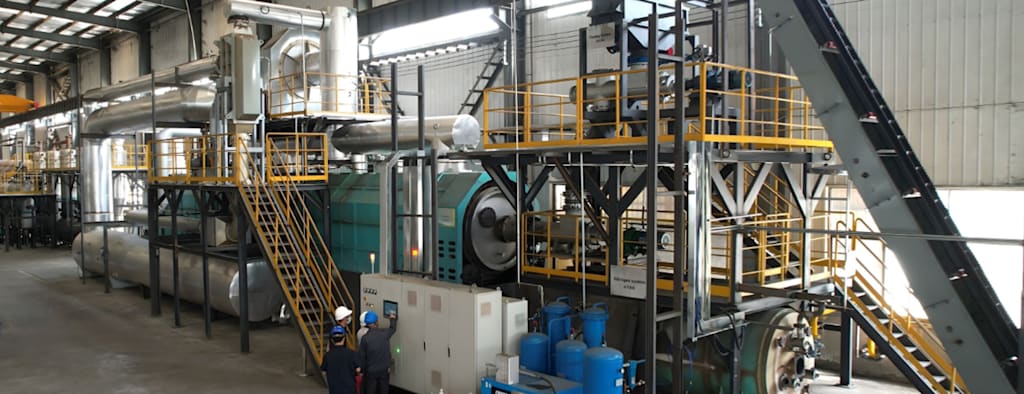
In the modern world, the challenge of waste management has escalated alongside rapid industrialization and urbanization. Plastics, rubber, and other non-biodegradable materials are accumulating at unprecedented rates, causing significant environmental hazards. Simultaneously, the demand for sustainable energy sources and raw chemical feedstocks continues to rise. Pyrolysis, a thermochemical process that converts waste into useful products, offers a compelling solution at the intersection of environmental stewardship and economic opportunity. This article explores how pyrolysis transforms waste into high-value fuels and chemicals, its applications, benefits, and the future potential of this technology.
What is Pyrolysis?
Pyrolysis is a process in which organic materials are thermally decomposed in the absence of oxygen. Unlike combustion, which burns waste to release energy, pyrolysis breaks down complex materials into simpler compounds. The primary outputs are:
- Pyrolysis Oil: A liquid product that can serve as fuel, substitute diesel, or a feedstock for chemical production.
- Syngas (Synthesis Gas): A mixture of hydrogen, carbon monoxide, and methane, useful for generating electricity or heat.
- Char: A solid carbon-rich residue that can be used as a fuel, activated carbon, or soil enhancer.
By carefully controlling temperature, pressure, and residence time, pyrolysis can efficiently convert a wide range of materials, including plastics, tires, biomass, and even electronic waste, into valuable products.
Applications of Pyrolysis Products
Pyrolysis Oil: Often referred to as “bio-oil” or “synthetic crude,” this liquid is highly versatile. It can be refined into transportation fuels, such as diesel and gasoline, or further processed to extract chemicals like benzene, toluene, and xylene. Industries such as petrochemicals, power generation, and manufacturing increasingly explore pyrolysis oil as a low-cost alternative to conventional fossil fuels.
Syngas: This combustible gas mixture can directly fuel generators to produce electricity or heat for industrial operations. Additionally, syngas serves as a precursor for producing hydrogen and methanol, bridging the gap between waste management and clean energy technologies.
Char: The solid residue from pyrolysis is a valuable carbon source. Activated char can be used in water purification and air filtration systems, while untreated char functions as a low-cost fuel. In agriculture, char can enrich soil, improve water retention, and reduce greenhouse gas emissions, contributing to sustainable farming practices.
Economic Benefits of Waste Pyrolysis
Pyrolysis transforms materials often considered liabilities into profitable commodities. For example, end-of-life tires and plastic waste—once expensive to dispose of—can be converted into oil and char with significant market value. A mid-sized pyrolysis plant can process thousands of tons of waste annually, generating a steady revenue stream.
Beyond direct product sales, pyrolysis reduces disposal costs for municipalities and businesses. Traditional landfill tipping fees and environmental penalties can be minimized, while the plant’s byproducts create additional revenue opportunities. Moreover, syngas generated on-site can be used to power the plant, reducing operational expenses and improving energy efficiency.
Environmental Advantages
Pyrolysis aligns closely with global sustainability goals. By diverting plastics and tires from landfills, it mitigates soil and water pollution. Pyrolysis also reduces greenhouse gas emissions compared to incineration, since the process occurs without combustion.
Additionally, replacing fossil fuels with pyrolysis-derived oil decreases dependency on non-renewable energy sources. The integration of pyrolysis into waste management systems contributes to the circular economy by converting waste into reusable materials, thus closing the loop in industrial production.
Future Opportunities
The future of pyrolysis is promising. Technological advancements are improving efficiency, product quality, and scalability. Hybrid systems that integrate pyrolysis with gasification or biorefining can maximize resource recovery. Governments and private investors are increasingly funding waste-to-energy initiatives, incentivizing the adoption of pyrolysis on a commercial scale.
Research continues into expanding feedstock options, such as electronic waste, agricultural residues, and marine plastics. These developments not only offer additional revenue streams but also tackle pressing environmental challenges on multiple fronts. Explore pyrolysis system.
Conclusion
Pyrolysis offers a transformative approach to waste management, converting plastics, tires, and other non-biodegradable materials into high-value fuels and chemicals. By generating profitable products, reducing disposal costs, and promoting environmental sustainability, pyrolysis represents a powerful tool for both businesses and society. As technology matures and market demand grows, the ability to harness waste for economic and environmental gain will become increasingly vital. For entrepreneurs, investors, and policymakers, pyrolysis is more than a process—it’s a pathway to a cleaner, more profitable, and sustainable future.
About the Creator
Bestonpyrolysis
Engaged in waste plastic/tyre/rubber recycling, oil sludge treatment, biomass recycling, sewage sludge management and paper recycling…
https://bestonpyrolysisplant.com/
Keep reading
More stories from Bestonpyrolysis and writers in Earth and other communities.
Profit from Waste: Business Opportunities in Pyrolysis of Plastic and Tires
In recent years, waste management has evolved from a mere environmental concern into a lucrative business opportunity. Among the innovative technologies emerging in this field, pyrolysis stands out as a transformative process capable of converting waste into valuable products. Specifically, the pyrolysis of plastic and tires has garnered attention for its dual impact: reducing environmental pollution while generating economic returns. This blog explores the business opportunities that arise from this waste-to-energy technology and why entrepreneurs and industries should consider investing in it.
By Bestonpyrolysisabout 7 hours ago in Earth
The Tree That Survived Everything ☀️🌳
THE OLDEST LIVING THING ON EARTH 🌲 High in the White Mountains of eastern California at an elevation of over ten thousand feet where the air is thin and the soil is poor and the wind blows with enough force to strip paint from metal, there stands a tree that was already ancient when the Egyptian pyramids were being built, a Great Basin bristlecone pine named Methuselah that has been alive for approximately 4,855 years making it the oldest known living non-clonal organism on Earth, and this tree has survived everything that the planet and human civilization have thrown at it including ice ages and droughts and lightning strikes and disease and the complete rise and fall of every civilization that has existed during its lifetime, and it continues growing, adding a fraction of an inch to its trunk each year with the patient persistence of something that measures time in millennia rather than in the minutes and hours that define human urgency 🌎
By The Curious Writer6 days ago in Earth
The Whale Who Sings Alone 🐋
52 HERTZ: THE FREQUENCY OF LONELINESS 🎵 Somewhere in the vast dark waters of the Pacific Ocean there is a whale who has been calling out for a companion for over thirty years and has never received a response, a whale whose vocalizations are produced at a frequency of 52 hertz which is dramatically higher than the frequencies used by any known whale species, blue whales communicate at frequencies between 10 and 39 hertz while fin whales use frequencies around 20 hertz, and this frequency mismatch means that while the 52-hertz whale can hear other whales they cannot hear it, or if they can hear it they do not recognize it as a whale call and do not respond, and this animal has been swimming through the ocean for decades producing calls that travel for hundreds of miles through water that carries every other whale's communications perfectly but that turns this whale's voice into something unrecognizable and unreachable 🌊
By The Curious Writer6 days ago in Earth
Kristi Noem is MELTING!!!!!
Former Homeland Secretary/"Ice Barbie" Kristi Noem is melting with scandals, not she is dealing with a cheating affair with one of the aides, killing her puppy, her own supportive husband Byron Noem is being exposed as a crossdresser, talking with fetish's Bimbos and paying them thousands of dollars. Kristi Noem's husband was exposed by the Dailymail this week exposing photos of Byron wearing and flaunting big gigantic balloon faux ta-tas, wearing paded shorts, and pouting his duck lips like it's 2013.
By Gladys W. Muturi5 days ago in The Swamp



Comments
There are no comments for this story
Be the first to respond and start the conversation.